GESG's Logistics & Supply Chain career roadmaps
Map your logistics career, from first seat to the C-suite.
Explore every logistics career path across seven lanes, role by role. See where each one starts, what comes next, and what earns the step up.

Logistics Career Paths by Lane
Seven ways in. Choose your lane.
Every logistics career starts in one seat, and every seat leads somewhere. These roadmaps show where each path begins, what the next role looks like, and what it takes to earn it.
Pick the lane that fits the work you like. Each one climbs from entry and specialist roles into management and senior leadership, and all seven meet at the same leadership table.
Warehouse & Distribution
29 roles
Start on the warehouse floor, picking orders, receiving freight, or running a lift. It’s where you learn how goods really move.
VP / Director of Warehouse Operations leads to VP / Director of Operations or VP / Director of Supply Chain.
Trucking, Fleet & Dedicated
25 roles
Start by logging miles hauling freight, or by tracking movements at a dispatch desk. From there, the road leads to running the whole fleet.
VP / Director of Transportation leads to VP / Director of Operations or VP / Director of Safety & Compliance.
Intermodal, Drayage & Port
18 roles
Start at a port gate, a rail yard, or a drayage desk, right where ships, trains, and trucks hand off cargo.
Director of Intermodal and VP / Director of Port Operations step up to VP / Director of Operations.
Freight Forwarding, Customs & International
21 roles
Start at a documentation desk, moving freight across borders one shipment at a time. The paperwork is the training ground, and trade expertise is where the career gains weight.
VP / Director of International Logistics and Director of Trade Compliance step up to VP / Director of Supply Chain or VP / Director of Safety & Compliance.
Specialized: Crane, Rigging & Heavy Haul
15 roles
Start on a flatbed, a rigging crew, or in a crane cab, moving the biggest and most complex loads in the business.
VP / Director of Specialized Transportation leads to VP / Director of Operations.
Freight Brokerage & 3PL
14 roles
Start on the phones, tracking loads and finding trucks. It rewards people who can sell and solve at the same time.
VP / Director of Brokerage and Director of Carrier Sales step up to VP / Director of Business Development or VP / Director of Operations.
Supply Chain & Demand Planning
16 roles
Start as an analyst with a spreadsheet and a forecast. The path leads to the people who set the plan.
VP / Director of Planning leads to VP / Director of Supply Chain or Chief Procurement Officer.
Logistics Executive Career Path
Senior leadership and the C-suite.
Sixteen VP, director, and chief-officer roles sit above all seven lanes, open to leaders from any of them. Reaching one takes more than climbing your own lane.
How to Become a Logistics Executive
Nobody starts a career in these seats. You arrive after years running a warehouse, a fleet, a brokerage desk, or a planning team in one of the seven logistics career lanes. Every lane’s director and VP seats lead here.
Some of these paths begin closer to the freight than you’d expect. A Driver Recruiter can grow into a Driver Recruiting Manager and then a VP of Human Resources. A WMS Analyst who adds systems work and team leadership can head toward VP of Information Technology. With an accounting degree and years of reporting experience, a Freight Billing & Claims Specialist can build toward Corporate Controller.
The leaders who reach the C-suite widen their scope early. They take on the budget, the board deck, a supplier negotiation, or an acquisition integration outside their own function. If you’re mapping that climb, a GESG specialist can help you plan it.
Logistics Leadership Jobs by Level
VP and Director Jobs in Logistics
VP and director seats run a whole function across every site. Most hiring teams look for 10 or more years leading that function, and 8 or more in corporate accounting leadership for the Controller.
Each lane also has its own top seats, such as VP / Director of Transportation and VP / Director of Warehouse Operations. The roles below are the shared ones, open to leaders from any lane.
Corporate Controller
Owns the company’s books, from the close and the controls to the audit, and reports results to the CFO.
VP / Director of Business Development
Owns the company’s growth: new markets, new clients, and the partnerships that open both.
VP / Director of Finance
Runs the financial plan, from the budget and forecast to the FP&A behind every major spending decision.
VP / Director of Human Resources
Leads hiring, development, labor compliance, and culture for a workforce spread across shifts and sites.
VP / Director of Information Technology
Keeps the company’s systems running and secure, from the warehouse management system and TMS to customer EDI connections.
VP / Director of Operations
Leads warehousing, transportation, and supply chain operations through the managers who run each building, terminal, and team.
VP / Director of Safety & Compliance
Keeps every operation inside regulatory standards and internal policy. The work runs from an OSHA inspection on the dock to a DOT audit of driver files.
VP / Director of Supply Chain
Runs the supply chain end to end, from sourcing and procurement to logistics and distribution.
Logistics Executive Career Support
Plan your move before the seat opens.
Directors and VPs weighing the step to the C-suite can start a confidential conversation with a GESG specialist.
C-Suite Jobs in Logistics
Chief officers set the strategic direction of the entire company. Most C-suite searches ask for 10 to 20 years in the field, with 5 or more at the executive level.
In transportation and logistics companies, the numbers these seats answer for move every day with fuel, linehaul, warehouse labor, and carrier margins. All of it rolls up into the operating ratio. At private-equity-backed portfolio companies, the CFO also walks the fund through those numbers, and the COO’s operating plan is how the investment pays off.
Chief Executive Officer (CEO)
Leads the company’s strategy, culture, and growth, and answers to the board and investors for the results.
Chief Financial Officer (CFO)
Oversees the company’s financial health and strategy, from cash flow and planning to the investor relationship.
Chief Operating Officer (COO)
Sometimes titled Chief Operations Officer. Runs daily operations and turns company strategy into results across every department.
Chief Human Resources Officer (CHRO)
Owns people strategy, from recruiting and retention to compliance and culture, across large, distributed workforces.
Chief Information Officer (CIO)
Leads enterprise technology, from systems and data to cybersecurity, so information moves securely and in real time.
Chief Procurement Officer (CPO)
Leads purchasing and sourcing strategy, from supplier reliability and cost to contract compliance.
Chief Risk Officer (CRO)
Runs enterprise risk management (ERM), identifying and reducing risk across the business, from operational disruptions to cybersecurity and insurance.
Chief Sustainability Officer (CSO)
Drives environmental and social responsibility strategy across fleets, facilities, packaging, and suppliers, including the Scope 3 emissions in the value chain.
How to Move Up to Logistics Executive Roles
At this level, you earn each step by answering for more of the business. That means more sites, a bigger budget, and the functions next to your own. These are common ranges, and leaders who run a P&L or integrate an acquisition early often move faster.
These are the most common routes to a chief officer’s seat:
- Corporate Controller to VP of Finance, then CFO
- VP of Operations to COO, then CEO
- VP of Supply Chain to Chief Procurement Officer
- VP of Safety & Compliance to Chief Risk Officer
- VP of Human Resources to CHRO
- VP of Information Technology to CIO
Peers cross over at the VP level too. VP of Operations and VP of Supply Chain are the most common crossover pair, and both feed the Chief Sustainability Officer seat.
| Step | Typical time | What earns it |
|---|---|---|
| Senior (VP / Director) | Often 5 to 10 more years past middle management, then 3 to 5 as a director before VP | Running a building, terminal, or department well, then results across sites and complex budgets |
| Executive (C-suite) | Typically 10 to 20 years in the field, with 5 or more at the executive level | Scope beyond your own function: finance exposure, a scaled team, or an integrated acquisition |
Executive Certifications for Logistics Leaders
At this level, a credential backs up a long record. Each one below signals depth in the function you’d lead. Every C-suite seat on this page asks for a bachelor’s degree, and each prefers a master’s, often an MBA.
| Credential | Who issues it | Where it matters |
|---|---|---|
| Certified Public Accountant (CPA) | Your state, as a licensed accounting credential | Corporate Controller, VP of Finance, and CFO, where it's highly preferred |
| Certified Supply Chain Professional (CSCP) | ASCM (formerly APICS) | VP of Operations, VP of Supply Chain, and CEOs who came up through planning or operations |
| Certified Professional in Supply Management (CPSM) | Institute for Supply Management (ISM) | Chief Procurement Officer and VP of Supply Chain. Three exams after three years of supply management work with a degree, or five without |
| SHRM-SCP or SPHR | SHRM, or HRCI (HR Certification Institute) for the SPHR | VP of Human Resources and CHRO. The credentials senior HR leaders carry |
| Certified Information Systems Security Professional (CISSP) | ISC2 | VP of Information Technology and CIO, wherever the seat owns cybersecurity |
| Lean Six Sigma Black Belt | Various providers, including ASQ | COO and VP of Operations. ASQ's Black Belt requires a completed project and recertifies every three years |
| NATMI Certified Director of Safety (CDS) | North American Transportation Management Institute (NATMI) | VP of Safety & Compliance. Five years in motor fleet safety, two NATMI courses, and an exam |
Logistics Career Path FAQ
How do you get into logistics with no experience?
Start at the entry tier of any lane. Most entry logistics roles ask for a high-school diploma or GED, and on-the-job training runs from a few days to a year. A few doors need a credential first. Forklift operators complete employer training and an evaluation before they drive a lift. New truck drivers finish Entry-Level Driver Training before the CDL skills test, and port workers need a TWIC card to enter secure areas.
What careers are there in logistics?
You’ll find 138 roles mapped across seven lanes here, plus 16 senior leadership and C-suite roles at the top. The lanes run from warehousing, trucking, and intermodal through freight forwarding, heavy haul, freight brokerage, and supply chain planning. Some careers are hands-on: driving, rigging, running a crane. Others run from a desk in dispatch, customs, carrier sales, or demand planning.
Do you need a degree to work in logistics?
Not to start. Most entry roles ask for a high-school diploma. A degree matters more as you climb, since most management roles in transportation, storage, and distribution call for a four-year degree, and people typically reach them 3 to 7 years after their first supervisory role. Supply chain and demand planning is the exception at the bottom, where most roles expect a bachelor’s degree from the analyst level up.
How long does it take to move up in logistics?
Entry takes up to 6 months, specialist roles often come within 1 to 3 years, and supervisory roles within 1 to 5. Middle management typically takes 3 to 7 more years, and senior leadership often 5 to 10 more. The pace differs by lane. Supervisory roles usually go to people with hands-on experience in the work plus one to two years of on-the-job training. What earns each step is experience, scope, and often a credential. Examples include ASCM’s CLTD and CPIM in distribution and planning, the CBP customs broker license in forwarding, and NCCCO certification in crane and rigging.
How do you become a logistics executive?
Build depth in one lane, then widen your scope. Most VP and director seats ask for 10 or more years leading a function, and most C-suite searches ask for 10 to 20 years in the field. What earns each step is answering for more of the business: more sites, a bigger budget, and the functions beside your own. Finance exposure and an acquisition on your record help most.
How long does it take to become a CEO in logistics?
Plan on 10 to 20 years in logistics, warehousing, supply chain, or transportation roles, with at least 5 years in senior leadership at VP level or above. The pace depends on scope more than time served. Leaders who run a P&L, launch a service, or integrate an acquisition earlier tend to reach the board’s shortlist sooner. The usual last step before CEO is the COO seat.
What's the difference between a Director of Operations and a VP of Operations?
Scope. A director usually runs a group of facilities or one side of the operation, and answers for those numbers. A VP owns the whole operations function, works directly with the COO and finance, and sets the policy the directors carry out. Most VPs spend 3 to 5 years as a director first.
How do you become a VP of supply chain?
Most Directors of Supply Chain come up from planning, procurement, or logistics management. Widen your scope past your own function with a supplier negotiation, a distribution project, or a seat in S&OP. Reaching the senior tier often takes 5 to 10 years past middle management, and most directors spend 3 to 5 years in the seat before VP. The CSCP and CPSM both strengthen the case.
What does a chief procurement officer do?
A Chief Procurement Officer owns what the company buys and the terms it buys on. The job covers supplier reliability, cost optimization, and contract compliance. In logistics, the CPO cuts operating costs, reduces supply-side risk, and builds vendor networks that let the business scale. Most CPOs bring 10 to 20 years in procurement, sourcing, or vendor management, with five or more in senior leadership.
Do you need an MBA to reach the C-suite?
It helps, and a strong record of results can carry the seat without one. Every C-suite seat on this page asks for a bachelor’s degree and prefers a master’s, often an MBA. The MBA counts most at companies in a growth or transition phase, or at companies heading toward M&A or the public markets.
AI Supply Chain Talent Gap White Paper
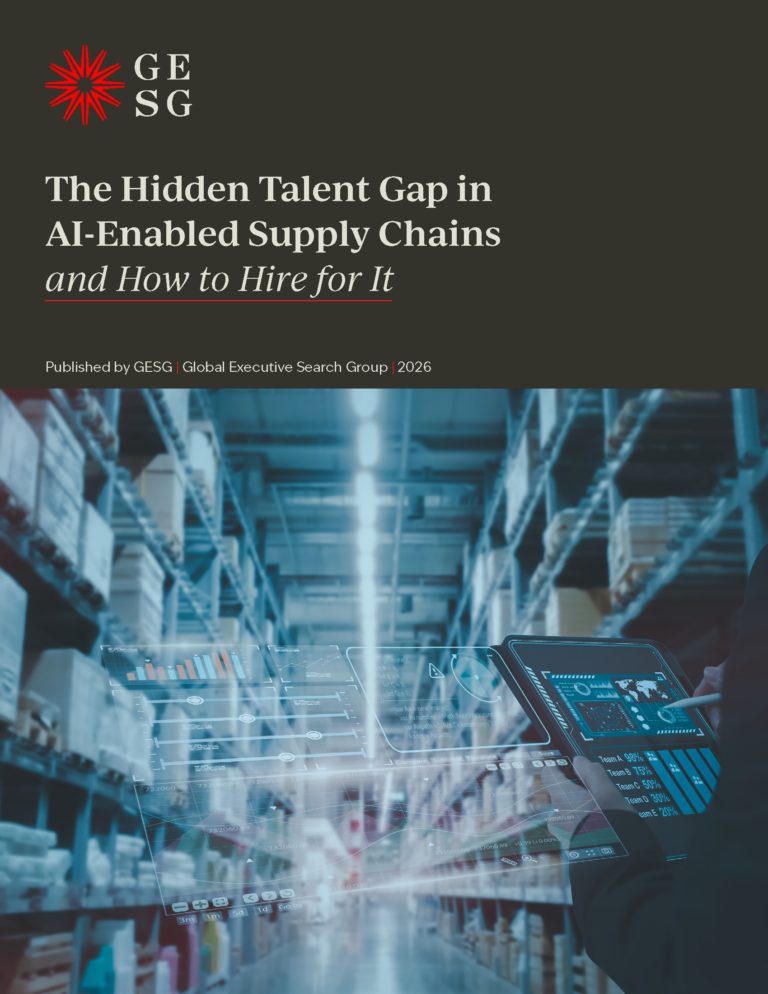
The Hidden Talent Gap in AI-Enabled Supply Chains
The five capabilities employers now look for as AI reshapes supply chain work, from domain credibility to sound judgment on risk.
Logistics Executive Leadership White Paper
Rapid Growth Leadership
A profile of the next logistics executive, who bridges operations, finance, and fluency with AI and automation.

Hire Logistics Leaders
Hiring for these seats? Hire with confidence.
GESG’s transportation, logistics, and supply chain executive search places the directors, VPs, and C-suite leaders who run these lanes. On average, clients meet 3 to 5 vetted finalists and reach an accepted offer in 60 to 90 days.